
 views
views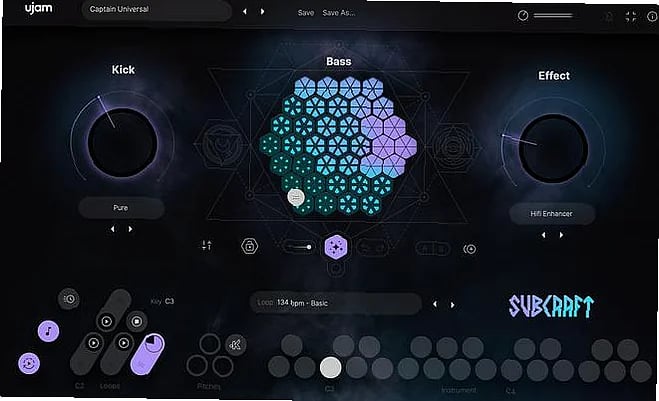
Over 68% of electronic music producers cite low-end frequency management as the most challenging aspect of achieving a professional mix. Poorly integrated sub-bass and kick elements can lead to muddiness, phase cancellation, and loss of impact across playback systems. Addressing this widespread issue requires more than trial and error—it demands precision-engineered tools designed specifically for low-frequency control.
Understanding the Challenge of Sub-Bass Integration
Innovative approaches to modern sound design prioritize clarity and cohesiveness in the lower spectrum. The human ear struggles to distinguish between sub-bass and kick drum elements when they occupy overlapping frequencies without proper alignment. This results in diminished punch and reduced translation across speaker types. To overcome this, advanced digital signal processing (DSP) and intelligent sound architecture are essential.
Core Components of Precision Bass Design
The integration of a built-in subwoofer simulator and programmable drum machine enables real-time auditioning of low-end content. Unlike traditional synthesizers that require external monitoring setups, this system models sub-frequency behavior accurately, even on standard nearfield monitors. This allows producers to make informed decisions about tonality, timing, and harmonic balance without relying solely on measurement plugins.
Proprietary DSP for Automatic Mix Stability
A dedicated digital signal processing engine continuously analyzes phase relationships between layered bass components. When sub-bass and kick signals conflict, the algorithm applies dynamic phase correction and spectral balancing to preserve transient integrity while maintaining low-end fullness. This ensures consistent output regardless of input source or layer complexity.
Comprehensive Sound Design Capabilities
The environment supports deep customization through an intuitive graphical interface. Users may shape waveforms, modulate harmonic content, and adjust envelope behavior with frame-accurate precision. Despite the depth of available parameters, the layout emphasizes workflow efficiency—critical controls are context-sensitive and adapt based on selected sound layers.
- Waveform selection with morphing capability
- Dual-stage envelope shaping for attack and decay characteristics
- Harmonic saturation with adjustable drive curves
- Spectral tilt control for brightness matching across sources
Leveraging Intelligent Randomization for Creative Exploration
Creative block often arises from over-familiarity with preset sounds. To counteract this, an intelligent randomization engine generates musically coherent variations by altering multiple interdependent parameters simultaneously. Each iteration maintains phase coherence and tonal balance, ensuring every generated option is immediately usable in a mix.
How Randomization Preserves Audio Integrity
Unlike conventional randomizers that apply changes indiscriminately, this system operates within defined psychoacoustic boundaries. It evaluates each proposed variation against criteria such as:
- Phase alignment between fundamental and overtone series
- Frequency masking avoidance with primary kick transients
- Amplitude consistency across dynamic ranges
- Temporal envelope compatibility
This constraint-based approach delivers novelty without sacrificing technical quality.
Navigating Subtone and Overtone Combinations
The platform provides access to a curated library of pre-processed subtones and overtones, all optimized for seamless blending. These components are not raw samples but dynamically rendered elements that respond to user-defined key, tempo, and scale inputs. This facilitates harmonic congruence between bass layers and melodic content elsewhere in the arrangement.
| Component Type | Processing Applied | Integration Benefit |
|---|---|---|
| Sub-bass tones | Phase-linear filtering, harmonic reduction | Minimizes intermodulation distortion |
| Mid-bass overtones | Dynamic resonance shaping, transient enhancement | Improves articulation on small speakers |
| Kick transients | Precise envelope carving, phase locking | Ensures punch retention in dense mixes |
Workflow Integration Tips
- Begin with a rhythmic reference track to establish timing alignment
- Use the auto-tune feature to match bass fundamentals to project key
- Apply subtle modulation to prevent static low-end buildup
- Export stems for A/B comparison in your DAW’s master chain
By combining algorithmic intelligence with hands-on control, this system transforms bass creation from a corrective task into a creative opportunity.