
 views
views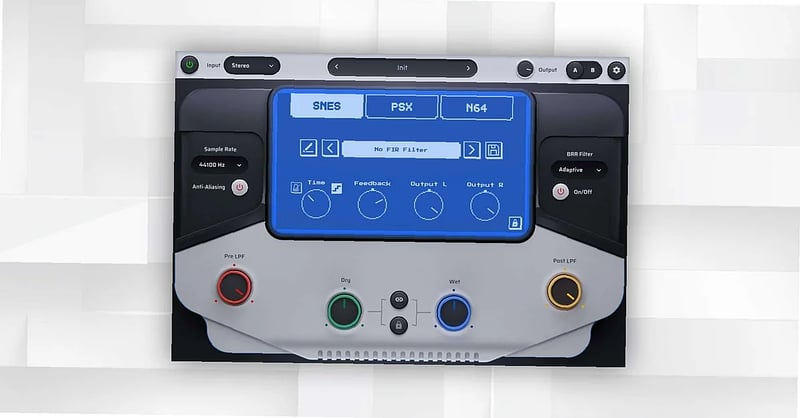
Pioneers of digital sound know the truth: the most nostalgic, emotionally resonant reverbs weren’t born in high-end studios—they emerged from hardware limitations that forced innovation. GameVerb unlocks that era with surgical precision, transforming retro constraints into creative superpowers.
How GameVerb Solves the Retro Reverb Challenge
Classic consoles didn’t have room for lush, CPU-heavy reverb. Instead, developers engineered compact, clever algorithms to simulate space and depth. GameVerb doesn’t just mimic these—it rebuilds them natively, preserving their soul while adding modern flexibility.
Authentic Emulation, Not Approximation
- Faithful recreation of SNES, PSX, and N64 reverb architectures
- Zero reliance on impulse responses—algorithmic modeling ensures dynamic responsiveness
- Preserves the character of vintage BRR (Bit Rate Reduction) and sample rate quirks
SNES: The Art of Delay-Based Depth
The SNES lacked true reverb chips. Developers used delayed, filtered echoes to simulate ambience. GameVerb captures this with presets inspired by Mario World, Donkey Kong Country, and Final Fantasy VI.
Key Controls:
- Time & Feedback: Dial in echo density and decay length
- Channel Settings: Match mono or stereo routing used in original games
- SNES Geek Mode: Access FIR (Finite Impulse Response) filters—the secret behind the console’s warm, metallic tail
Adjust FIR coefficients directly to recreate the exact tonal coloration of specific soundtracks, or push beyond original limits for experimental textures.
PlayStation: Nine Signature Reverbs, Fully Programmable
The PSX had a dedicated reverb processor, producing some of gaming’s most iconic spatial effects. GameVerb includes all nine factory algorithms:
| Room | Studio Small |
| Studio Medium | Studio Large |
| Hall | Space Echo |
| Echo | Delay |
| Half Echo |
Tailor the Space:
- Size: Adjust perceived room dimensions
- Decay: Control how long reflections linger
- Width: Expand or narrow the stereo image
- Feedback: Add intensity without muddying the mix
Use these to place vocals, synths, or drums exactly where they’d sit in a classic PS1-era cutscene or menu screen.
N64: Building Reverb From the Ground Up
The Nintendo 64 shipped without built-in reverb. Instead, developers assembled custom solutions using DSP components. GameVerb recreates this modular approach with three distinct modes:
- Mode 1 – Delay Line Reverb: Powers the acoustics in Ocarina of Time and Super Mario 64. Clean, rhythmic repeats ideal for open-world immersion.
- Mode 2 – Comb Filter Reverb: Used in Banjo-Kazooie, Donkey Kong 64, and Super Smash Bros.. Creates dense, resonant spaces perfect for indoor levels.
- Mode 3 – Dual Cycle Mode: Exclusive to GameVerb. Alternates between classic configurations for evolving, unpredictable textures.
Advanced Control:
Enter N64 Geek Mode to manipulate comb filter delay lines at the sample level—fine-tuning resonance peaks and damping behavior with surgical precision.
Global Features for Modern Workflows
GameVerb bridges retro authenticity with studio-ready functionality.
- 5 Stereo Modes: Switch between Stereo, Mono Left/Right, Mono Sum, and Mid for precise imaging
- Plugin A/B States: Instantly compare two settings with one click
- Global Bypass: Toggle effect on/off without losing your chain
- Dry/Wet Lock: Prevent preset changes from altering your mix balance
- Pre/Post LP Filters: Shape tone before and after reverb processing
- Sample Rate Reduction: 11, 22, 32, and 44.1 kHz options with anti-aliasing toggle
- SNES-Style BRR: 5 fixed modes plus adaptive reduction for authentic lo-fi grit
- Output Clipping: Add subtle saturation or aggressive digital crunch
Saved Presets & Recall
Create and store custom configurations across all platforms. Use global presets to save favorite starting points for lo-fi beats, chiptune leads, or ambient pads.
Whether you’re scoring a retro-inspired indie game or adding nostalgic texture to an EDM drop, GameVerb turns historical limitation into creative advantage.