
 views
views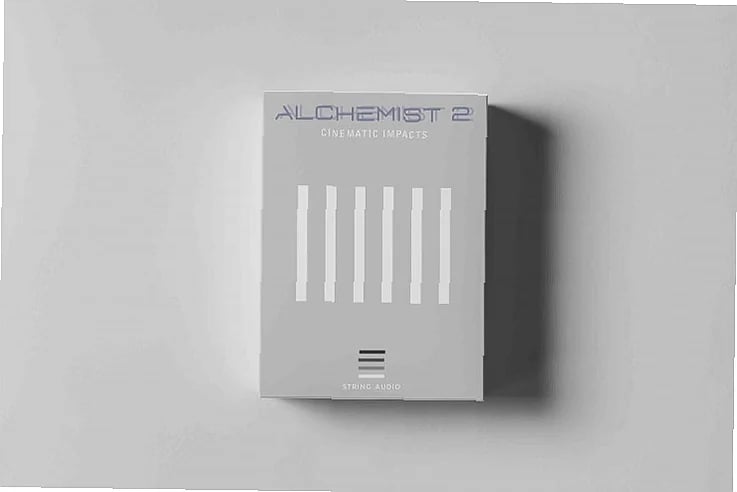
Leading sound designers now have a significantly more expressive tool at their disposal—Alchemist 2 Cinematic Impacts isn’t just an update, it’s a transformation in how cinematic textures are crafted and controlled. With deeper engine integration, expanded modulation options, and real-time hardware control via TouchOSC, this version redefines workflow efficiency and sonic flexibility.
Understanding the Alchemist 2 Cinematic Impacts Structure
The updated library operates within Native Instruments’ Kontakt platform and is built around two distinct instruments that serve different creative needs:
- Alchemist 2 Cinematic Impacts 2: Features 2.4GB of entirely new sample content and 300 fresh snapshots, all driven by the upgraded ALCHEMIST 2 engine.
- Alchemist 2 Cinematic Impacts 1: Retains the original 1.6GB of samples and 195 snapshots from the first release, now fully optimized with the new engine.
In total, users gain access to over 900 high-resolution WAV files, organized across six independent layers. Each layer can be finely tuned using individual controls, making complex sound layering intuitive and precise.
How to Maximize the Main Engine Controls
The core of Alchemist 2’s power lies in its layered architecture. To get the most out of each impact, follow these steps:
- Isolate Layers: Use the solo and mute buttons to focus on specific elements. This helps identify which layers contribute most to your desired texture.
- Adjust Timing and Shape: Modify ADSR envelopes per layer to tighten or stretch transients, tailoring the attack and decay to fit film cues or trailers.
- Modulate Pitch and Pan: Apply subtle pitch shifts or spatial panning to create movement. The pan and amp LFO send options allow dynamic automation directly from the interface.
- Boost or Cut Layer Intensity: Use the layer boost and cut functions to emphasize key components without clipping.
- Engage Effects Selectively: Bypass effects on individual layers to maintain clarity when stacking multiple sounds.
A powerful randomize function lets you generate new combinations instantly—ideal for breaking creative blocks while staying within a cinematic tonal range.
Using the Dedicated Motion Engine for Rhythmic Textures
The Motion Engine adds rhythmic motion through two integrated tools:
- Arpeggiator: Converts held notes into rhythmic sequences. Adjust rate, direction, and note resolution to generate evolving pulses from static impacts.
- Pan and Amp LFOs: Now enhanced with on-the-fly activation via mouse click. This means you can trigger sweeping spatial movements or volume pulsations during playback without pre-recording automation.
To use: Enable the LFO, set the desired waveform and rate, then click the activation button when you want motion to begin—perfect for live scoring sessions.
Leveraging the Color Engine for Sonic Depth
This engine uses convolution reverb to shape tone and space. It includes 200 unique impulse responses (IRs) designed specifically for cinematic contexts—ranging from vast cathedrals to metallic resonators.
New navigation features simplify exploration:
- Use Prev / Next buttons to cycle through IRs without closing menus.
- Apply the Randomize function to discover unexpected acoustic spaces that inspire new directions.
Pair dark impacts with bright IRs to add haunting tails, or blend sharp hits with dense reverbs for hybrid trailer textures.
Shaping Tone with the Effect and EQ Engines
The Effect Engine provides seven real-time processors:
- Skreamer (overdrive)
- Lo-fi (bit reduction)
- Chorus
- Tape saturation
- Delay
- Distortion
- Reverb (via convolution in Color Engine)
These are assignable via the modulation wheel, enabling hands-on performance control. For example, start clean and gradually increase distortion as tension builds in a scene.
The EQ Engine allows frequency sculpting, though specific band parameters are not detailed in the source. Focus on balancing low-end weight against high-frequency glare, especially when layering multiple impacts.
Setting Up TouchOSC for Real-Time Control
One of the major updates is native support for TouchOSC, a MIDI/OSC controller app available on iOS and Android.
- Download TouchOSC on your mobile device.
- Load the included custom Alchemist 2 template.
- Map controls such as effect intensity, LFO engagement, or IR selection to faders or buttons.
- Connect your device to the same network as your DAW and route OSC messages to Kontakt.
This setup enables tactile manipulation of parameters during playback, ideal for live performances or improvisational composition.
What’s New in the Updated ALCHEMIST 2 Engine?
The enhancements focus on usability and interactivity:
- Native TouchOSC integration with a dedicated template.
- On-the-fly activation of Volume and Pan LFOs via clickable interface buttons.
- Streamlined navigation in the Color Engine with Prev/Next buttons for impulse responses.
These changes reduce menu diving and make performance more immediate.