
 views
views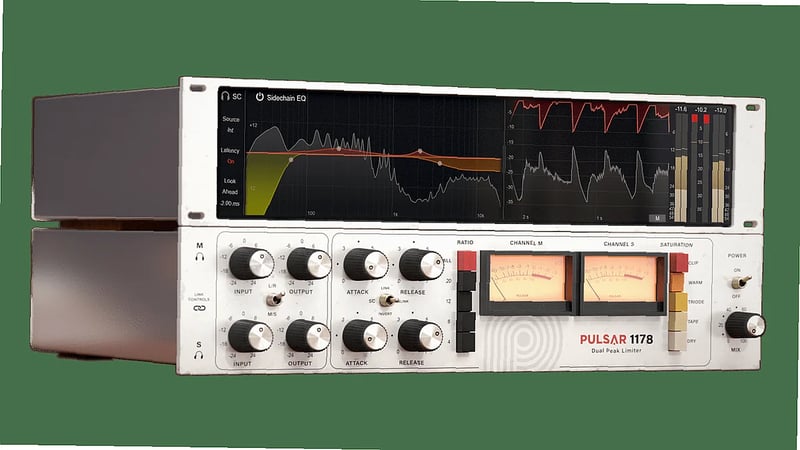
Advanced Dynamic Control with the Pulsar 1178: A Modern Take on a Studio Legend
Uncontrolled transients and inconsistent dynamics can undermine even the most carefully recorded tracks. Whether you're wrestling with explosive drum room mics or vocals that lack presence, traditional compression often falls short—either too slow to catch fast peaks or too colorless to add character. Enter the Pulsar 1178, a meticulously modeled software recreation of the rare and revered FET 1178 hardware unit, enhanced for today’s production demands.
Understanding the Legacy of the 1178 Compressor
The original 1178 compressor was developed as a cleaner, more agile alternative to the iconic 1176. Though less common in studios, it earned legendary status through use by top-tier engineers such as Chris Lord-Alge, Bob Clearmountain, and Nigel Godrich. Its fast response and transparent yet expressive tone made it ideal for shaping dynamic performances without sacrificing clarity.
Pulsar’s software version captures these tonal characteristics with circuit-accurate modeling, ensuring that the punch, speed, and harmonic response of the hardware are preserved in digital form. But rather than stop at emulation, Pulsar has expanded the 1178’s capabilities for modern workflows.
How to Optimize Sidechain EQ for Precision Compression
One of the most powerful enhancements in the Pulsar 1178 is its full sidechain EQ. This feature allows you to shape which frequencies trigger compression, giving you surgical control over dynamic behavior.
- Insert the Pulsar 1178 on a drum bus where kick and snare are competing for space.
- Engage the sidechain EQ and apply a low-shelf cut around 400 Hz to reduce snare bleed influencing kick-triggered compression.
- Boost midrange frequencies (1–2 kHz) if you want vocal sibilance to drive compression more effectively.
- Use high-pass filtering in the sidechain when compressing bass-heavy sources to prevent low-end rumble from causing excessive gain reduction.
This level of control ensures that only the desired elements influence compression behavior, preserving groove integrity while enhancing punch.
Leveraging Saturation Modes for Sonic Character
While the original 1178 was known for transparency, Pulsar introduces four saturation types—Tape, Triode, Warm, and Clip—that are fully integrated into the gain reduction path. Unlike post-compression saturation, this design means the distortion shapes how the compressor responds, altering both dynamics and timbre.
- Tape: Adds subtle harmonic warmth and gentle high-frequency roll-off, ideal for smoothing aggressive transients.
- Triode: Emulates vacuum tube behavior, introducing second-order harmonics for richer, more organic textures.
- Warm: Applies mild even-order distortion across the spectrum, enhancing presence without harshness.
- Clip: Introduces hard clipping for aggressive edge, perfect for rock or electronic genres needing grit.
To use these effectively, start with Tape or Warm on vocal tracks to enhance intelligibility during compression. For drum busses, try Clip mode to tighten transients and add bite.
Using Advanced Metering to Fine-Tune Attack and Release
The Pulsar 1178 includes comprehensive metering tools essential for precise dynamic shaping:
| Meter Type | Function | Best Use Case |
|---|---|---|
| Peak Meters | Display instantaneous signal levels | Catching transient spikes |
| RMS Meters | Show average loudness over time | Monitoring perceived volume and consistency |
| Scrolling GR Display | Visualizes gain reduction over time | Adjusting attack/release for musical pumping |
Observe the scrolling display while adjusting attack and release controls. A fast attack will clamp down immediately on transients, while a slower setting allows initial punch to pass through. Pair this with RMS feedback to ensure your track maintains consistent energy without fatiguing the listener.
Application Scenarios: Where the Pulsar 1178 Excels
Drum Room Processing: Apply the Pulsar 1178 with fast attack and medium release to tame chaotic room mics. Engage Clip saturation to emphasize the ‘crack’ of the snare, creating a tight, rocking bounce.
Vocal Compression: Use a moderate attack and higher ratio to maintain vocal clarity in dense mixes. The extended attack range allows preservation of natural articulation while controlling dynamics. Add Warm saturation to enrich thinner voices.
Bass and Guitar Busses: With sidechain EQ focused on upper mids, you can make compression respond to pick attack rather than low-end weight, resulting in tighter, more defined performance.